Qalibaf answers ten key questions on Iran–US talks in Islamabad
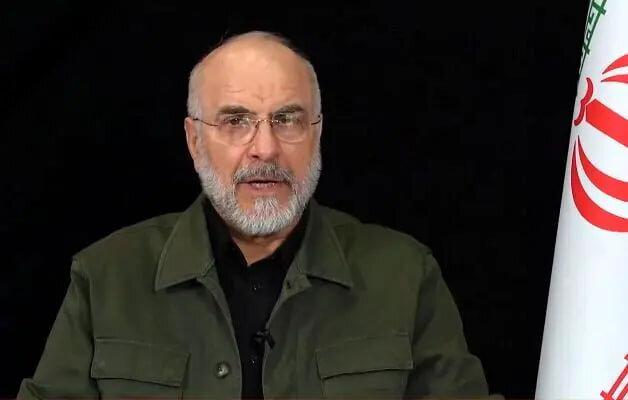
TEHRAN – In a televised interview, Iranian Parliament Speaker Mohammad Bagher Qalibaf, who headed Iran’s negotiating delegation in Islamabad, addressed ten key questions regarding the talks with the United States and other topics.
Here’s a concise summary of the interview in a question-and-answer format.
1- Why do you believe Iran is victorious in this war?
Trump did not achieve his goals. He faced a worse disaster in Isfahan than in Tabas [the ill-fated Operation Eagle Claw in 1980]. We are undoubtedly victorious.
The recent conflict is the third imposed war, which started with America’s cunning in the middle of negotiations. In the 12-day war [in June 2025], there was a 14-hour delay in our reaction. But in the third imposed war, despite the martyrdom of the commander-in-chief [of the armed forces, Ayatollah Seyyed Ali Kamenei], the IRGC commander-in-chief, and the chief of general staff of the armed forces, our reaction was carried out in the shortest possible time and with precision.
The F-35 incident was not an accident. It was the result of a laborious and operational effort. With the missile that exploded near the aircraft, the enemy understood our capabilities.
Iran has become more formidable in its offensive capabilities and [military] design than in the past. The adversaries could not believe it until they saw it proven in the field. For nearly 50 nights, [the Iranian] people have remained on the streets. Iran hit about 180 [enemy] drones — a capability it did not have in the previous war.
2- Do you say that Iran is stronger than the US militarily?
The Americans possess more wealth, equipment, and military facilities, and the Zionist regime also holds great power. We did not destroy them. [Nevertheless,] we are the winners in this war. We fought an asymmetric war and repelled the enemy with our own design and preparation. The enemy had money and facilities, but did not act correctly.
3- Why has Trump called for a ceasefire?
The US government claims “America First,” but in practice, it demonstrates that “Israel First” matters more. We hold the advantage in the field, and that is why Trump is calling for a ceasefire. The enemy’s goal was to force Iran to surrender in a war lasting only two or three days, but we fought for 40 days, and the enemy was forced to accept a ceasefire. They could not make us surrender.
The idea that we destroyed the enemy’s military is not true. Even though we did not destroy them, we are still the winners; that is a different matter.
Whether in the field, in the streets, or in diplomacy, it is we who command the position of strength. The enemy cannot impose its will on us.
Negotiation is simply another form of struggle. There will be no compromise in diplomacy. If the enemy makes a mistake at any moment, we are ready. We have no trust in the enemy. The armed forces are fully prepared.
On approximately the 36th or 37th day of the conflict, a 15-point proposal was conveyed to Iran through Pakistani intermediaries, specifically the Prime Minister and the Chief of Army Staff. [This is after] Trump had threatened to hit [our] infrastructure.
After review, Iran formulated ten points that outlined the nation’s demands. We informed Pakistan that we did not accept the original fifteen points, but that our ten points were acceptable. We stated that if the US had input on these ten points, they were negotiable. The Americans later proposed nine points, but Iran insisted on its original ten. Eventually, the US requested a temporary ceasefire to begin the negotiations.
4- What role did you expect Trump to play in announcing the ceasefire?
We informed Pakistan: if the US wants a ceasefire, Trump must announce the request on his [Truth Social] account. This ensures everyone knows the request originated with them. This is the diplomacy of authority.
Hezbollah launched its recent operations to support Iran; the Resistance Front came to our aid. Therefore, the ceasefire had to include them. A primary condition from Iran was a region-wide ceasefire, including both Iran and the Resistance Front.
5- Who currently controls the Strait of Hormuz?
The Iranian Armed Forces control the Strait of Hormuz. Our intent is for those who did not align with the enemy to pass through without difficulty. We have no desire to increase insecurity; not now, and never
After the talks in Islamabad started, the US attempted to send a minesweeper after discovering a mine [in the Strait of Hormuz], but we did not back down. We warned that it would be a violation of the ceasefire and that we would strike. We moved to the brink of conflict, and they retreated.
6- What exactly did you tell the American delegation about their minesweeper?
In Islamabad, I warned the American delegation: “If your minesweeper advances even a small distance, we will shoot.” They requested 15 minutes to issue a command to turn back. They gave the order, and it returned.
7- What is your response to the US blockade of Iran?
The Americans have been trying to impose a blockade for days. This supposed siege means that while others pass freely, Iran is blocked! It is a decision rooted in clumsiness and ignorance.
8- What will happen if the US does not lift the blockade?
If the U.S. refuses to lift its blockade, the Strait of Hormuz will be restricted. If we are prevented from passing, then we will ensure no one [connected to the adversaries] passes.
I have no trust in the enemy. Building trust is their first task. Trump posted [on Truth Social] that the negotiators were alive to negotiate, but if no decision is made within 24 hours, it is unknown if they will stay alive. This is your behavior. We will stand until the end.
9- When did negotiations with the US actually begin?
We did not hold any negotiations until 48 hours before the ceasefire. Trump is a master of lying and psychological warfare. Yesterday [on April 17], he posted eight tweets, seven of which were false.
The negotiations began when Trump posted a request for a ceasefire. We summarized our position in 10 points, and the Leader of the Islamic Revolution [Ayatollah Seyyed Mojtaba Khamenei] accepted the underlying basis and the specific conditions [to start the negotiations].
We were in Pakistan for thirty hours, arriving at midnight on Saturday. There were no prior negotiations with the U.S. before this; there were only exchanges of messages [through mediators.]
We view negotiation as a method of struggle, a way to complete the work of the field and assert the rights of our people on the streets. Rest assured, we are pursuing these issues one step at a time.
10- How would you describe your personal readiness for what lies ahead?
Whether it is a matter of negotiation papers or war plans, my resolve remains the same. I am prepared to sacrifice my life and my honor. We move as one under the Leader of the Islamic Revolution, following his guidance exactly: neither overstepping nor falling behind.
All the enemy’s efforts are aimed at destroying the unity and solidarity of the people. Nearly 30 million [Iranian] people have already registered for the JANFADA [those who are ready to sacrifice their lives] campaign.
When the threat was made to bomb our infrastructure, families—including parents with their children—arrived to form human chains to protect those sites.
Our strength lies with the people, and we owe them our deepest gratitude. To ensure that no harm comes to our nation today, it is essential that we all stand behind the Leader.
Leave a Comment